

The Basics of Rory McIlroy's Driver Swing with Michael Bannon
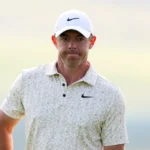
Hosted by Martin Hall, this lesson features Rory McIlroy and Michael Bannon, his coach since childhood. On the agenda are the fundamentals they’re still working on: aiming at a reference point two feet in front of the ball, aligning with the fairway lines, adjusting the grip, and taking a wide stance at the start of the backswing.
To be continued
What the lesson shows
It all starts with the driver setup. When using a driver, position the ball on the inside of the left heel; Rory admits he tends to move it forward too much in an attempt to generate more power. To aim, he chooses a intermediate target About two feet in front of the ball, a small spot on a rock in the video: much easier to aim at than a target 200 yards away. Bannon uses the image of rails: the outer rail—the one the ball follows—points toward the target; on the inner rail, the feet, knees, hips, and shoulders are parallel. He distinguishes between body alignment and club aim: you can be perfectly parallel and still aim off-target. Rory tends to open his upper body and close his lower body; he checks his alignment with an alignment stick and feels his lower body shift slightly to the left to free up his left hip.
Next, the grip. As a child, Rory had a very strong grip—up to four visible knuckles on his left hand; Bannon knew that as he grew older, his right hand would take over, and it was Rory who asked to switch it when he was around 11 or 12. As recently as 2016, he changed his grips to return to a more neutral left-hand grip, which felt uncomfortable for a week: we’re working on it what's right rather than what's comfortable. He also demonstrates the “bullet,” a low driver shot against the wind: same tee, ball still positioned forward; he maintains his height on the downswing and flattens his angle of attack. Finally, the width at the takeaway It comes from the left arm and the body rotating together—never from the arms alone.
The Exercise, Step by Step
- Behind the ball, choose a reference point about two feet in front of it, on the line of play.
- Place the club facing this marker, then align your feet, knees, hips, and shoulders so they are parallel.
- If necessary, check the alignment using an alignment rod placed on the ground.
- Place the ball inside your left heel.
- Check your grip: your left hand shouldn't grip too tightly.
- Start the backswing by rotating your left arm and body together.
Key Takeaways
Mistakes to Avoid
- Aim directly at a distant target.
- Confusing body alignment with club alignment.
- Moving the ball too far forward in an attempt to set up a shot.
- Reach out to find the width using only your arms, without turning your body.
- Giving up on changing your grip because it feels uncomfortable.
Driving Range Mode
Keep it in plain sight, on the rug.
- Pre-shot routine: intermediate marker, clubface, then aligning the body
- A ground alignment stick at every session
- Slow takeaways, left arm and body together
- A few “bullets”: same tee, height maintained on the downhill shot
Your Questions
Where does Rory set his intermediate target?
About two feet in front of the ball, on a visible mark on the ground. He lines up with it, then looks at the target: he knows then that he’s aiming correctly.
Why did Rory switch to a kids' grip?
His grip was very strong—up to four knuckles were visible on his left hand. Michael Bannon knew that as his right hand grew stronger, it would take over; Rory asked him to switch when he was around 11 or 12 years old.
How does he play the “bullet”?
Without changing the tee height, and with the ball still positioned forward: he maintains his height on the downswing, makes less contact on the right side of the clubface, and flattens his angle of attack. The ball flies significantly lower.
How can you create width without losing synchronization?
According to Bannon, you should start by moving your left arm and body together right from the start. Trying to generate width with just your arms forces you to compensate later in the swing.
Learn More
Video posted on YouTube by its creator (Rory McIlroy). Best Golf Tips selects and summarizes the best free lessons, without hosting them.