

Where the Chip Lands: A Lesson from the FFGolf
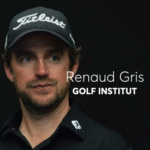
Between 16 to 10 yards from the edge of the green, the basic chip shot involves landing the ball just at the edge of the green so that it rolls toward the flag. In this lesson filmed at Terre Blanche Golf Club, the French Golf Federation demonstrates how to ensure consistent contact and then fine-tune the balance between flight and roll.
To be continued
What the lesson shows
The goal is to obtain a consistent ball flight and to control where it lands. This requires a consistently identical point of contact, slightly downward, with as few movements as possible. Stance: The ball is positioned between the middle of the feet and the right foot, with a very slightly open stance, knees pointing toward the target, and 70% of your weight on the left side. Hold the club as straight as possible, resting it flat or slightly on its toe—never on the heel—to avoid catching the grass and closing the clubface.
The drill: Place a club on the ground, at the grip, about ten centimeters to the right of the ball. If you touch this club, it indicates either that your wrists are uncoiling too early, or that your hands and shaft are too far forward, causing your swing path to be too horizontal. Mentally, focus on a single reference point: getting the ball down. 1 m to 1.50 m on the green, to avoid random bounces off the front of the green. We practice with different clubs to calibrate the flight-to-ground ratio for each player, to be repeated on every new course, and then we practice in a simulated situation with balls placed around the green and various flag positions.
The Exercise, Step by Step
- Pick a landing spot 1 m or 1.50 m onto the green.
- Place the ball between the middle of your feet and your right foot, with a slightly open stance and your knees facing the target.
- Place the club as straight as possible, either flat or slightly on its tip.
- Shift about 70% of your weight to your left side.
- Place a club on the ground, at the grip, about ten centimeters to the right of the ball, and play without touching it.
- Practice with several clubs, always aiming for the same landing spot, and observe how each one rolls.
- Finish with real-life scenarios: shots played around the green, various flag positions, and the right club for each situation.
Key Takeaways
Mistakes to Avoid
- Rest the club on your heel: it catches the grass and the clubface closes.
- Unfastening the wrist straps too early.
- If you overdo the handle and hold your hands too far forward, your shoulders rise and the swing becomes too horizontal.
- Land the ball on the front of the green, where the bounce is unpredictable.
- Play all chips with a single club, often an open sand wedge.
Driving Range Mode
Keep it in plain sight, on the rug.
- Keep the club on the ground to the right of the ball to control the angle of attack
- The same destination with three or four different clubs
- Record each club's distance, and recalibrate on a new course
- Finish with a series of varied scenarios around the green
Your Questions
Where should you land the ball on a basic chip shot?
1 m or 1.50 m onto the green. The lesson explains that this prevents random bounces off the front of the green while also avoiding a swing that’s too big to reach farther.
Why should you rest the club on its tip rather than flat?
A club resting on its heel grips the ground and the clubface closes, especially depending on the condition of the grass. A club held vertically, flat, or slightly on its toe, goes through anything.
What is the club on the ground to the right of the ball for?
He checks to see if you make contact with the ball very lightly as you come down. Making contact as you come down indicates that your wrists are relaxing too early; making contact as you come up indicates that your hands are too far forward and your swing is too horizontal.
Which club should you use for chipping?
It's not always the same. We keep the same landing point and switch clubs depending on the required roll distance, which is why it's important to calibrate the flight-to-roll ratio for each club.
Learn More
Video posted on YouTube by its creator (Renaud Gris). Best Golf Tips selects and summarizes the best free lessons, without hosting them.