

Matsuyama's draw approach: why he changed it
In Japan, Hideki Matsuyama was chipping by cutting the ball. On American-style grass, his ball started to slide off the clubface. In this ALBA TV video, in Japanese, he explains how he switched to a slight draw approach and how he then manages his 56° and 60° wedges.
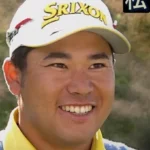
To be continued
What the lesson shows
Ever since he was a child, Matsuyama has been chipping by cutting: Lower body stationary, slightly stiff follow-through, no use of the right wrist, very open stance. The contact was excellent, but depending on whether the ball bounced on the grass or not, the ball slid across the face. On American grass, he could no longer get the ball close to the pin. Watching other players, he noticed that few of them hit the ball that way. So he adopted a journey from the inside to the inside, with the feeling of ’wrapping“the ball with the clubface, even on a short-side chip. His stance has gone from very open to just slightly open, and his swing path has become flatter, with few divots. He quotes Tiger Woods, who barely picks up any dirt during practice: “Go in low, come out low.”.
He acknowledges that his old stance is more comfortable, and that he finds himself reverting to it despite himself on elevated, firm greens, where a high, soft shot loses distance. Ideally, he’d just move the ball back, but he can’t quite manage that yet. As for wedges: he avoids the deep divots, which throws off his speed control. He gauges his distances with a shallow contact, then adds a few yards when he needs to hit the ball deeper. He rarely uses the full 60° (about 85 yards), especially not toward a two-tiered green where the ball rolls back. The 56° is the club he uses most often (105 to 110 yards on a straight shot, controlled shots around 80); to add spin, he opens the clubface slightly and hits from the inside, resulting in a straight flight. For shots under 30 to 40 yards, the 60° is easier; beyond that, the 56°.
The Exercise, Step by Step
- Watch your chips: if the ball slides across the face despite good contact, your approach may be too cut.
- Narrow your stance to get closer to a square stance.
- Look for an inside-to-inside path, with the feeling of wrapping the clubface around the ball.
- Make the entrance flatter: use less soil, and keep both the entrance and exit low.
- Build up your wedge distances with this shallow contact, then note the difference when you make deeper contact.
- To generate more spin with the 56° wedge, open the clubface slightly and swing from the inside out along a straight path.
Key Takeaways
Mistakes to Avoid
- Always take your approach shot with a very open stance.
- Hit deep divots with a wedge.
- Play a full 60° shot toward a two-tiered green where the ball might roll back.
- Use the 60° angle for all approaches beyond 40 yards.
- To revert to one's old habit as soon as a difficult situation arises.
Driving Range Mode
Keep it in plain sight, on the rug.
- Small indoor-to-indoor chips, almost square stance
- Divot Control: As Little Soil as Possible
- Same targets at 56° and 60°, about 40 yards away
- Controlled shot at 56°, about 80 yards—first a normal shot, then one with more spin
Your Questions
Why did Matsuyama stop using the split approach?
Because on American grass, the ball would slide across the clubface depending on whether the bounce hit the grass or not. He could no longer get the ball close to the hole and noticed that few players were making such shots.
What does it mean to ’wrap“the ball with the clubface?
That's how it feels with an inside-to-inside swing path: the racket face meets the ball rather than cutting across it. According to him, this produces a ball that rises well off the face and has more consistent spin.
Why does he avoid deep divots when using a wedge?
Because his speed control is off. He builds up his distance with a shallow contact, then adds a few yards when the situation requires him to make deeper contact.
When does he choose 56° instead of 60°?
Most of the time. Beyond 30 to 40 yards, he finds the 56° easier to use, and the ball sits up better on the clubface. He rarely uses the full 60°, and never on a two-tiered green where the ball might roll back down.
Learn More
Video posted on YouTube by its creator (Hideki Matsuyama). Best Golf Tips selects and summarizes the best free lessons, without hosting them.