

The club
About Golf de l'Isle Adam
Designed by American architect Ronald Fream on a 200-hectare wooded estate in the Oise valley, Golf de l'Isle Adam is a 6,188-metre par-72 eighteen that moves between forest and plateau.
- When The course is open all year. Spring and autumn are the best times to enjoy the colours of the forest, while summer allows long evening rounds.
- Access L'Isle-Adam lies north of Paris, about 37 km by road from Notre-Dame.
- Who can play Open to visiting golfers.
The courses
The course
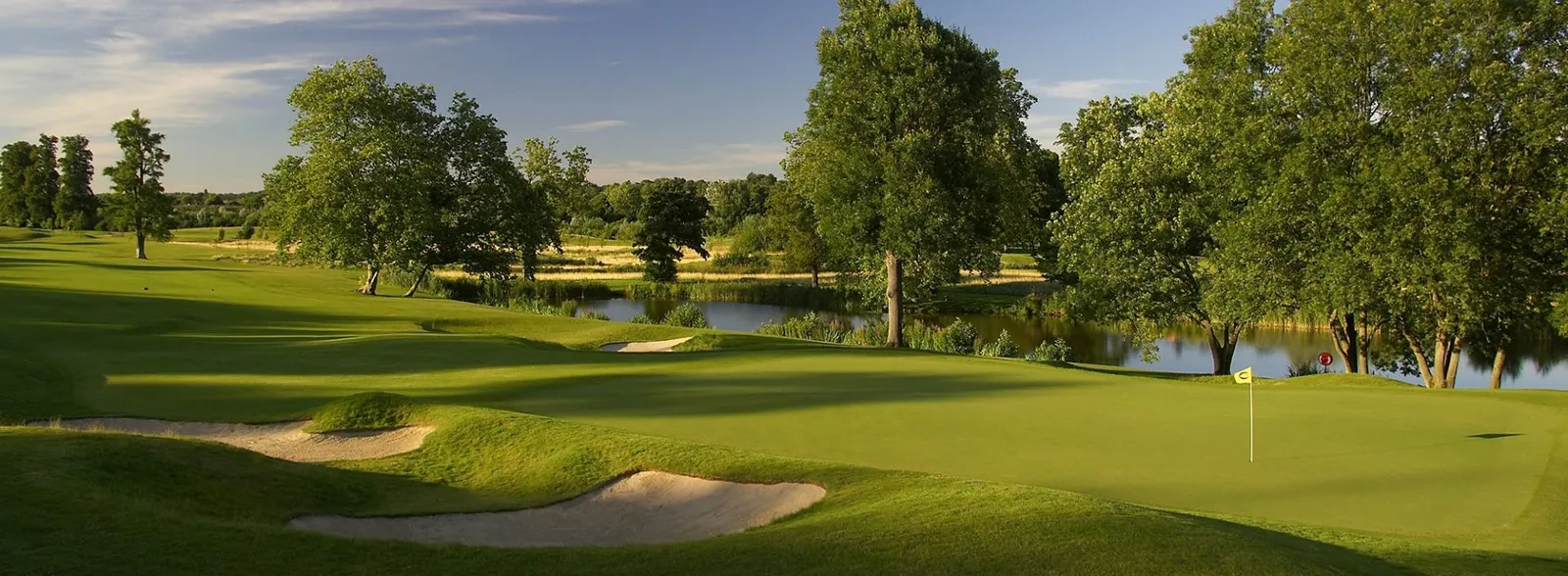
Wide, naturally rolling fairways, with some holes in the forest and others on an open plateau.
Our tips
How to play Golf de l'Isle Adam
L'Isle Adam is a par 72 of 6,188 metres over rolling ground. The course divides into holes cut through the forest and others set out on a plateau, and each needs a different approach.
In the forest the fairways are wide but lined with century-old trees: position matters more than distance, and a drive into the woods often costs a chip out sideways. On the plateau the ground is more open and the wind plays a bigger part; keep the ball flight down when it blows and allow for run on the naturally undulating fairways.
The 14th is billed as the longest hole on the course: break it into three comfortable shots rather than forcing it. On such rolling terrain, read the slopes carefully when approaching, because the ball tends to follow the ground towards the low side of the green.
Plan your trip
When to play
The course is open all year. Spring and autumn are the best times to enjoy the colours of the forest, while summer allows long evening rounds. In winter the wooded areas dry more slowly after rain, so check course conditions with reception. Demand is high at weekends: book your tee time well ahead. Staying at the neighbouring hotel makes an early start easy.
Getting there
L'Isle-Adam lies north of Paris, about 37 km by road from Notre-Dame. The club quotes around 45 minutes from Paris via the A15 and then the A115, and 25 minutes from Roissy-Charles-de-Gaulle airport. The course is on the Chemin des Vanneaux, next to the hotel of the same name. Driving is the most practical option.
History
The story of Golf de l'Isle Adam
Golf de l'Isle Adam covers a 200-hectare estate in the heart of the Oise valley, in protected woodland with century-old trees. The course opened in the mid-1990s; several golf guides give the year as 1995.
It was designed by American architect Ronald Fream. According to the club, his aim was a course that everyone could enjoy, where each player can set a realistic target, appealing to beginners and low handicappers alike. The result blends British and American influences.
The clubhouse is a restored 18th-century farmhouse, home to the Le 19 restaurant. Next to the course, Le Domaine des Vanneaux, Golf & Spa, part of the MGallery collection, has 67 rooms and suites in buildings designed by Jean-Michel Wilmotte, along with a spa and a second restaurant, Le Piaf. The estate also has six permanent archery courses.
On site
Facilities
Stay nearby
Where to stay near Golf de l'Isle Adam
Hotels and rentals around the course, with live prices.
🏨 See all places to stay near the course ↗
Commercial link: we may earn a commission at no extra cost to you.
Nearby
Nearby golf courses
Questions
Good to know
How many holes does Golf de l'Isle Adam have?
18 holes (L'Isle Adam: 18 holes).
Who designed Golf de l'Isle Adam?
It was designed by Ronald Fream and opened in 1995.
How far is Golf de l'Isle Adam from Paris?
About 37 km by road from central Paris.
How can I contact Golf de l'Isle Adam?
By phone: Reception / bookings +33 1 34 08 11 11.
Who designed Golf de l'Isle Adam?
American architect Ronald Fream, who set out to create a course that players of every standard could enjoy.
Can I stay on site at Golf de l'Isle Adam?
Yes, Le Domaine des Vanneaux, Golf & Spa (MGallery), next to the course, has 67 rooms and suites.
How long is Golf de l'Isle Adam?
The 18-hole course measures 6,188 metres and is a par 72.
Sources: the club (verified listing), Best Golf Tips, © OpenStreetMap contributors (ODbL). Updated: 2026-11-15